- Claude Code can analyze HAR files (exports of a browser’s network traffic) to debug real-world problems quickly.
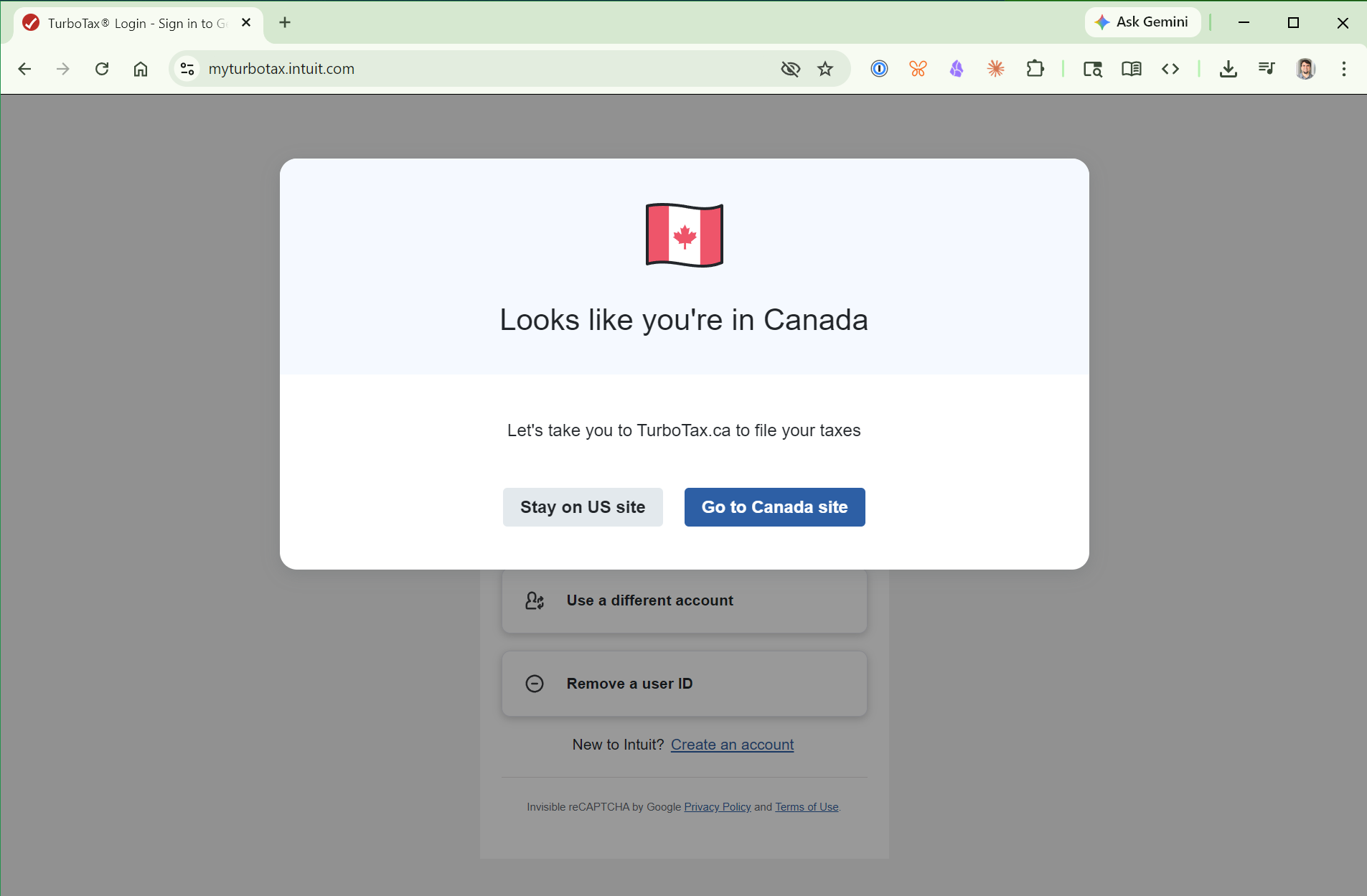
- TurboTax read my browser timezone, decided I was in Canada, and redirected me to the Canadian login page.
- One prompt was enough to find the root cause and get the steps to fix it.
Claude Code as a daily tool
I use Claude Code every day at work, and I keep finding ways to use it outside work too, especially for tasks that involve analyzing a lot of data.
The example in this post is a nerdy one: I asked Claude Code why TurboTax thought I was in Canada and asked me whether I wanted to switch from the default US page to the Canadian one. That is particularly annoying during tax season. So I decided to apply one of my debugging techniques from work to my personal life.
Capturing network traffic with a HAR file
Any modern browser lets you download all the request information it used to communicate with a website. In Chrome, open Developer Tools and go to the Network tab, where you can save all the network traffic for a specific page load. The export saves every transaction in the HAR format (HTTP Archive). Here is what TurboTax was showing me:
You can open HAR files in one of the many free HAR readers online and try to work out what is happening by hand. That is laborious work, especially if you have no idea what you are looking for. With Claude Code, one prompt can be enough.
Asking Claude Code
Once I downloaded the file, I started Claude Code with the following prompt:
The file `myturbotax.intuit.com.har` contains the page load for the TurboTax login page.
Why does it think I'm in Canada and not in the US?
I could have also provided a screenshot of the page, but I did not find that necessary in this case.
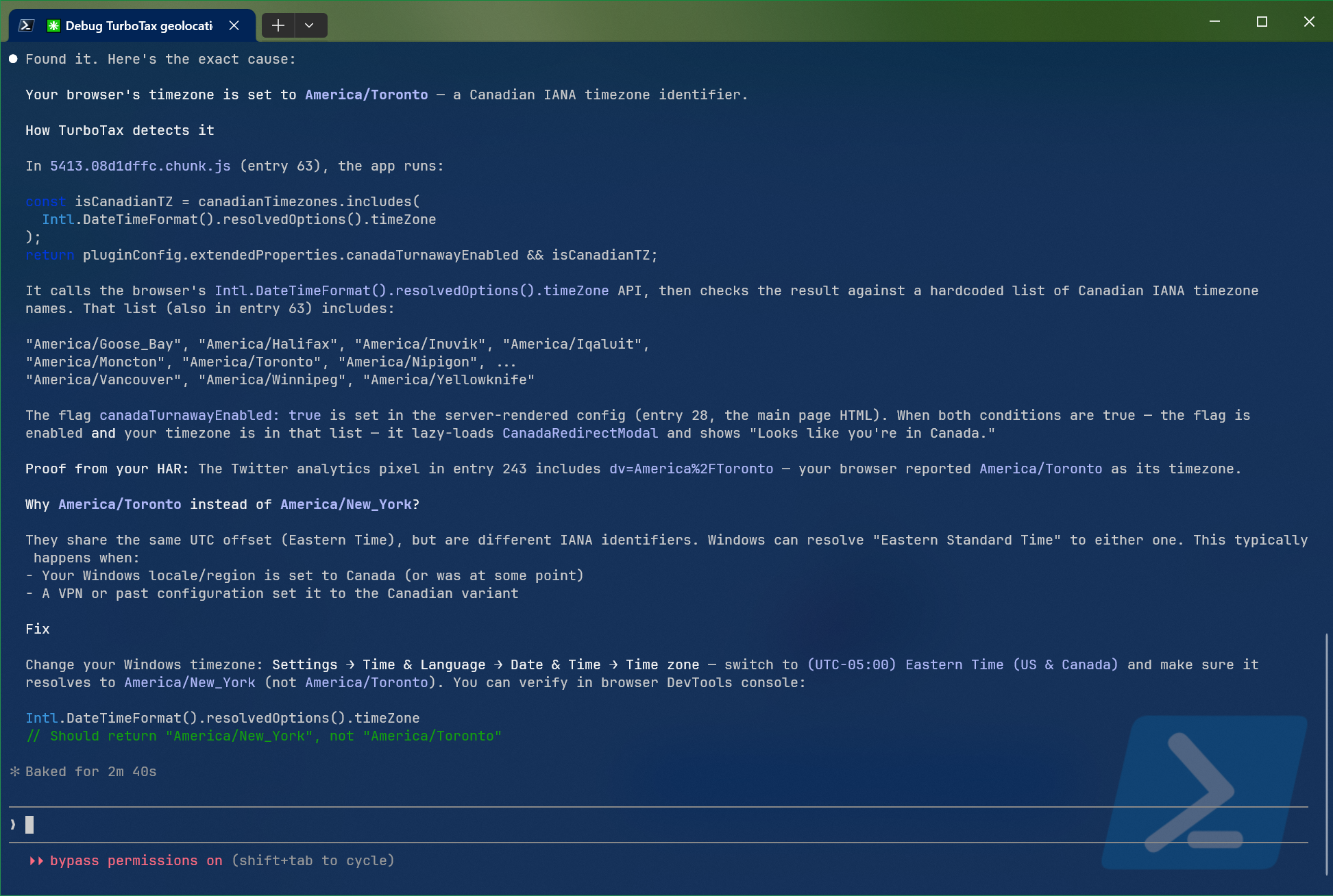
Claude Code used Python to read and analyze the contents of the file, filtering for the relevant information. It found that the login page used JavaScript to read my browser timezone and infer my location from it. Since my timezone matched a Canadian one, TurboTax was redirecting me to the Canadian page.
Even better, it went beyond the root cause and gave me the steps to change my browser timezone to the equivalent US timezone.
For any opaque system that behaves unexpectedly, a surprisingly effective first step is to capture its network traffic, drop the raw file into Claude Code, and ask a plain question.